- Ecom Product Finders
- Posts
- [EPFN] Proof Beats Potential. Every Time.

Welcome to Issue #93 of the EcomProductFinders Newsletter! 🎉
One Year In. Zero Excuses. A Lot of Proof.

January 25th marked one full year of running and building our riding school, and I’m writing this today because I know that in the next 48 hours we’ll cross 300 riders.
From zero to 300 in under a year.
A real business with monthly recurring revenue on track to cross seven figures, 17 people on the team, a physical location, referrals coming in naturally, and people talking about us without us asking them to. That doesn’t happen by accident. It happens because you decide and then you move.
This upcoming Saturday we’re hosting our anniversary event, and the numbers still make me pause. We already have more registrations than we’ve ever had for our webinars, we’re closing in on 600 people, all pony rides are fully booked, and somehow a business milestone turned into a full-blown experience. We’ll have roping stations, a schooling show, a chiropractor for everyone, food trucks, and a lot of other things that make this feel more like a community than a company.
Recently, a close friend told me, “Izabella, two years ago you were advising us on how to start a business. We’re still thinking about it. And you already built a new one.” That hit. Not because it was flattering, but because it was true. Most people think. Some people plan. Very few people act.
This business came out of love, out of burnout, out of wanting to build something meaningful, something that actually makes people’s lives better, and something impossible to replace by AI. I’m proud of my team, especially because my family is the core of it. My husband. Our two daughters. And yes, now even one daughter’s boyfriend. We’re in it together.
Some months there are no weekends. Our first real weekend since November 2024 was Christmas, when I finally sat on the couch and did absolutely nothing. I’m not sleeping perfectly. I’m not fully rested. I don’t have unlimited freedom right now. But I have self-realization, and I’m genuinely happy.
This is proof that nothing is impossible. If you want something, you don’t wait for clarity. You decide. Then you commit. Life will test you. Daily. I’m tested every single day. But the reward is knowing you built something real.
And to everyone new here: thank you for being part of this story. We didn’t stumble into this. We built it.
What’s next? 500 riders and a new location.
And one more thing that matters: all of this was bootstrapped.
Zero borrowed money. Zero investors.
VoC AI Product Development, Step by Step (With the Exact Prompts)
If you want to build products that sell, you need a system that removes uncertainty.
This is where VoC.AI becomes your unfair advantage. Not as a trendy add-on, but as the backbone of product development.
Here is the exact workflow I want you to follow, step by step. It is simple and it is deliberate.
And it’s the same approach my team uses when we are building products that have to survive the real market, real reviews, real competitors, real shoppers.
Step 1: Choose the right product
Your job is not to invent demand. Your job is to locate demand, then improve the offer.
Pick a product where:
There is proven sales velocity (not one hero listing carrying the category)
The average review rating is not perfect (4.2 to 4.6 is a sweet spot)
You can spot obvious complaints in the reviews
You can realistically improve 2–5 things without turning the product into a science project
Rule: If you cannot explain how you will differentiate in one sentence, do not touch it.
Step 2: Scrape reviews from the top listings
Choose the top 5–10 ASINs that represent the market.
Then scrape:
1-star, 2-star, 3-star reviews (pain, friction, failure points)
4-star reviews (these are gold because they often say “I like it but….”)
5-star reviews (these show what must stay and what customers emotionally reward)
Use VoC AI to generate a report and download it.

Upload the downloaded VoCAI report into GPT
Do not paste a small sample of reviews.
Download the report from VoCAI, then upload that file into ChatGPT so it can read the full dataset and not hallucinate patterns based on tiny examples.
When you upload, tell GPT what it is looking at and what you want out of it.
Prompt #1: Build the VoC insight map
Copy and paste this exactly:
PROMPT 1
“Act as a senior Amazon product development strategist and VoC analyst.
You are reviewing an uploaded VoC AI report that includes customer reviews for multiple competing ASINs in the same product category.
Tasks:
Create a structured VoC insight map with the following sections:
Top 10 customer complaints (ranked by frequency and severity)
Top 10 customer delights (ranked by emotional intensity)
Hidden expectations customers assume but don’t always say directly
Situations where the product is used (context and scenarios)
Buying triggers (what pushes them to purchase)
Dealbreakers (what causes returns or negative reviews)
For each complaint, include:
Example phrasing customers used (short excerpts)
The root cause (design, materials, usability, packaging, instructions, sizing, durability, etc.)
A suggested product improvement direction
Output format:
Use numbered lists, bold headings, and keep it very practical.”
Step 4: Turn insights into a prioritized improvement roadmap
Now we take the VoC insight map and convert it into real development decisions.
Prompt #2: Create the improvement roadmap
PROMPT 2
“Using the VoC insight map you created, build a prioritized product improvement roadmap.
Requirements:
Create 3 tiers:
Tier 1: Must-fix improvements that directly reduce negative reviews and returns
Tier 2: Differentiators that increase conversion rate and justify a higher price
Tier 3: Optional enhancements that create brand preference and repeat purchases
For each improvement, include:
The customer problem it solves (in customer language)
The recommended solution (specific, measurable, not vague)
Expected impact on reviews, conversion, and price elasticity
Risk level (low, medium, high)
Cost impact estimate (low, medium, high)
Manufacturing complexity (low, medium, high)
Then give me the top 5 improvements you would implement if I want maximum impact with minimal added cost.”
This is how you keep the product build realistic. Anyone can make a product better by adding expensive features. The skill is making it better while protecting margin.
Step 5: Create the primary customer avatar from the reviews
You are not guessing the avatar based on demographics.
You are building it from customer language, emotions, and buying logic.
Prompt #3: Primary avatar
PROMPT 3
“Based ONLY on the uploaded VoC report and the customer language inside reviews, build the PRIMARY buyer avatar.
Include:
Who they are (life context, not just age)
What they were trying to accomplish when buying
What frustrates them most (specific)
What they care about that competitors are ignoring
What they are afraid of (risk perceptions)
What words they repeatedly use when describing problems and wins
What would make them pay more
Then provide:
A one paragraph avatar summary
A ‘What they say vs what they mean’ section
A list of 10 listing phrases that will resonate with them (based on their language)”
This matters because the product improvements you choose should align with what the primary buyer actually values, not what you personally think is cool.
Step 6: Ask GPT for a sketch concept of the improved product
This is where the product starts becoming tangible.
Prompt #4: Product sketch instructions
PROMPT 4
“Now take the Tier 1 and Tier 2 improvements and translate them into a product concept.
Deliver:
A written product specification (dimensions, materials, components, functions)
A labeled sketch description (front view, side view, key features)
Notes on how each improvement connects directly to the VoC complaints
3 alternative concept options (A, B, C) that solve the same VoC problems in different ways
Important:
Do not add features that are not supported by VoC evidence.”
You’re basically forcing the concept to stay anchored to demand, not fantasy.
Step 7: Generate a photorealistic product mockup prompt
You are not doing this for “pretty pictures.”
You are doing this so you can:
Validate the concept visually
Test with customers or polls
Communicate clearly to manufacturers and designers
Build listing image direction early
Prompt #5: Photorealistic render prompt
PROMPT 5
“Create a photorealistic product render prompt for an AI image generator.
Requirements:
The product must reflect the exact product specification and improvements we defined
Include camera angle, lighting style, background setting, and texture details
Include 3 versions:
Clean studio render on white background
Lifestyle render in a realistic use scenario
Detail close-up render showing the most important feature
Output:
Give me 3 final prompts I can copy and paste into an image generator.”
Once you have this, you can generate visuals and start pressure testing the offer before you spend money.

If you follow the prompts but skip the tutorial, you’ll still get results, but the video is where you see the small things that make this workflow actually work fast.
The tutorial shows:
How to select the right ASIN set for review scraping
What to ignore in reviews so you don’t build dumb features
How to spot “silent demand” inside 4-star reviews
How to convert VoC into differentiation without destroying your margins
Go watch the full walkthrough and do it in parallel. That is how you build speed.
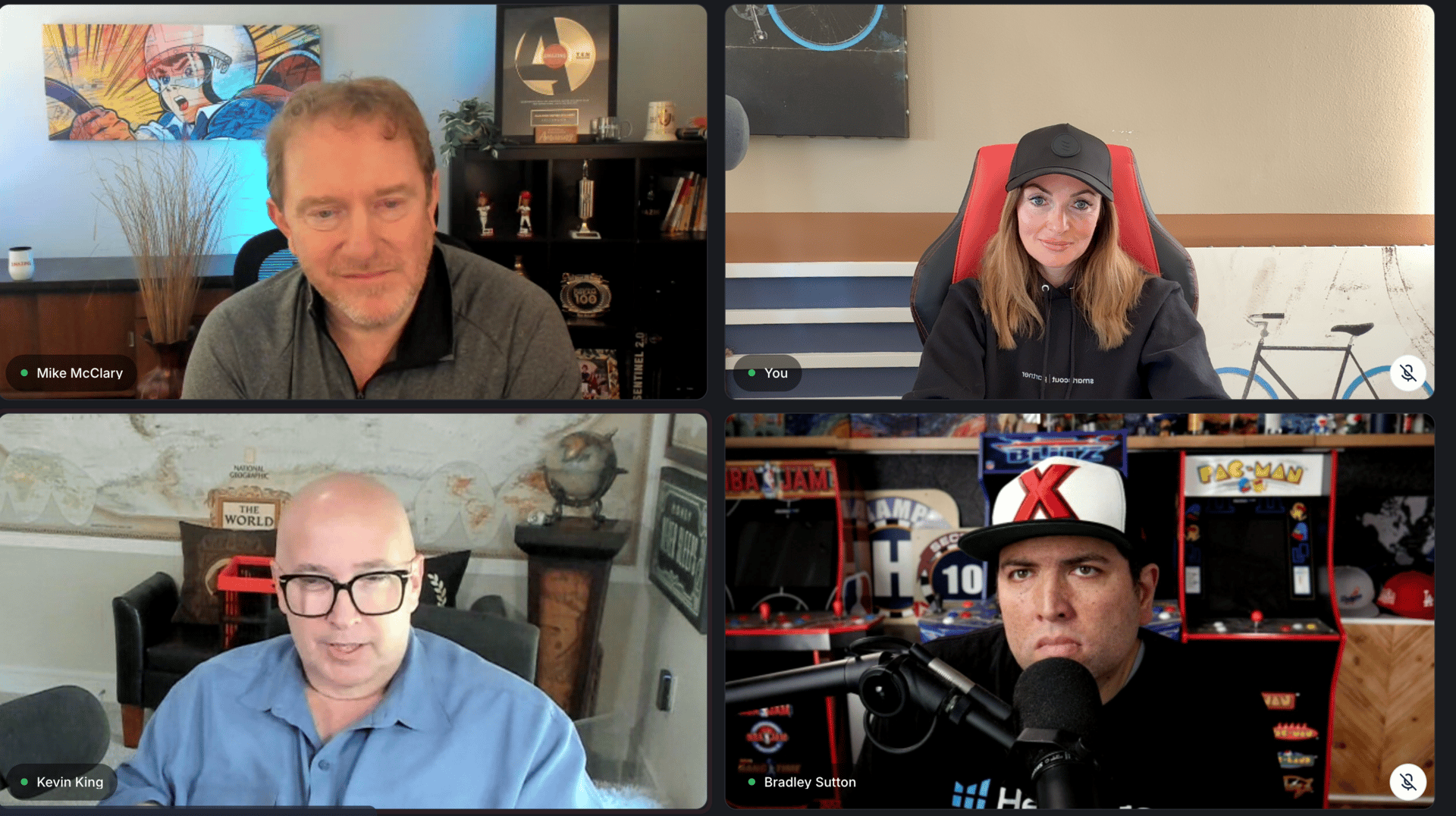
One Panel, Real Amazon Conversations, with Kevin King, Bradley Sutton, and Mike McClary
Yesterday I was on a panel alongside Mike McClary and Kevin King and Bradley Sutton, it was one of the most engaging and valuable panels I’ve been part of in a long time.
If you want access to this level of thinking, strategy, and execution, I genuinely recommend joining Kevin King’s Billion Dollar Sellers Club. It’s $9 for the first month, and the amount of practical material inside easily covers daily Amazon issues, scaling decisions, and growth challenges most sellers are stuck on.
It’s for people who are already implementing and want to move faster without guessing.
If you’re serious about growing and want better inputs around you, I’d sign up.
Read This Only If You Can Actually Follow Instructions
Don’t read this if you think your brain won’t get it. This is for people who implement, not skim.
My very good friend Amy Wees put together a phenomenal, step-by-step product listing optimization strategy.
It’s clean, structured, and built for sellers who want higher conversion, not more excuses.
She walks through the entire framework in a dedicated video, and you should watch it in full. Not parts of it. All of it.

Amy also won the Hacked contest created by Nick Penev, which tells you everything you need to know about how well this actually works.
If you’re reading this issue and you don’t click through to watch this completely, you’re not taking your Amazon business seriously enough. Period.
One practical tip from me:
If you’re generating images or creatives and see a Gemini logo →
Drop the image into ChatGPT and prompt it to remove the Gemini logo cleanly and naturally before using the asset. Small details like this matter more than most people realize.
Single Product Opportunity – Final DFY Release

This exists for one reason: Done-For-You is ending.
As we sunset DFY, we’re opening one final opportunity to purchase a single, deeply reasoned product idea at a price that will never be available again.
You receive one product idea, delivered as a written report. Not trends. Not guesses. Not recycled concepts. The product is selected specifically for your situation, not the market in general.
The recommendation is based on:
Your budget
Your Amazon selling status
Your category preferences
Market demand versus competition
Real buyer behavior and scalability logic
We deliberately eliminate overcrowded categories, price-war environments, and brand-dominated spaces. The goal is not to impress you with volume.
The goal is to give you one product that is buildable, defensible, and rational.
There are no calls.
There are no reviews.
There are no revisions.
After purchase, you’ll receive a short intake email asking for:
Your budget
Whether you currently sell on Amazon
Your Amazon store link (if applicable)
Categories you want
Categories you do not want
All sales are final. No refunds.
This format and this price are permanently ending.
The “This Is Stupid” Product That Quietly Prints Money

This is exactly the kind of product most people scroll past and laugh at.
A tiny squirrel finger puppet. Looks stupid. Feels random. Zero prestige. And that’s precisely why it works.
This isn’t an innovation play. It’s a behavior play.
It’s cheap enough to be an impulse buy, weird enough to stop the scroll, and positioned perfectly for white elephant gifts, Easter baskets, gag gifts, classrooms, and social content. Nobody goes on Amazon searching for a “brilliant product idea.”
They search for funny, awkward, last-minute solutions that solve one small emotional problem: I need something right now that will make people laugh.
At $9.99, with simple materials, no sizing issues, no electronics, and minimal customer support, this type of product doesn’t depend on brand storytelling or complex differentiation. It depends on placement, seasonality, and understanding how humans actually buy.
Most sellers skip opportunities like this because they’re trying to be clever. Meanwhile, stupid products quietly stack sales because they fit real buying behavior, not ego.

“Clarity doesn’t come before action.
It comes because of it.”
Happy Thursday!
See you in 2 weeks!
Izabella